Uganda is one of Africa’s destinations that still remains slightly off the most popular safari routes. When people think of an African safari, Kenya, Tanzania, or South Africa often come to mind first. Uganda, however, offers something different – the opportunity to combine a classic wildlife safari with tropical forests, mountain gorillas, lakes, rivers, waterfalls, and encounters with local culture, all within a single journey.
Known as the “Pearl of Africa,”the country is remarkable above all for its extraordinary natural diversity. Savannahs and open plains alternate with green hills, wetlands, and dense tropical forests. The Nile flows through the country, while its great lakes form an important part of both the landscape and the lives of local communities and wildlife.
For this reason, a Uganda safari is about much more than watching wildlife from a safari vehicle. Elephants, giraffes, lions, buffaloes, and hippos are only part of the experience. A journey can also include boat safaris, guided walks, waterfalls, visits to local communities, and one of the most remarkable experiences Uganda has to offer – encountering mountain gorillas in their natural habitat.
Why Is Uganda a Unique Safari Destination?
One of the main reasons to choose Uganda is the opportunity to experience many different sides of Africa within a single journey.
A classic wildlife safari is an important part of the experience. In Uganda’s national parks, you can travel across open savannahs and observe wild animals in their natural habitat. Yet just a few days later, the landscape can look completely different – with mountain slopes, farmland, tropical forests, or waterfalls surrounded by lush green vegetation.
It is precisely this changing scenery that makes the journey interesting even on days when you travel longer distances between national parks. The roads pass through small towns and villages, alongside local markets and roadside shops, as well as banana and tea plantations. In some areas, you will see Uganda’s distinctive red soil and wide-open landscapes, while in others, green hills and dense vegetation dominate the scenery. Along the way, you gradually discover not only the country’s protected areas but Uganda itself.
Uganda also offers several different ways to experience its wildlife and landscapes. In addition to traditional game drives, some destinations offer boat safaris, guided walking safaris, or trekking through the forest. This variety is particularly appealing to travellers who want each part of their journey to offer something different.
There is another important feature that makes Uganda special. It is one of the few places in the world where a classic African safari can be combined with an encounter with mountain gorillas. This remarkable combination of open savannah and tropical forest is what makes Uganda such a distinctive safari destination.
Uganda’s Wildlife – What Can You See on Safari?
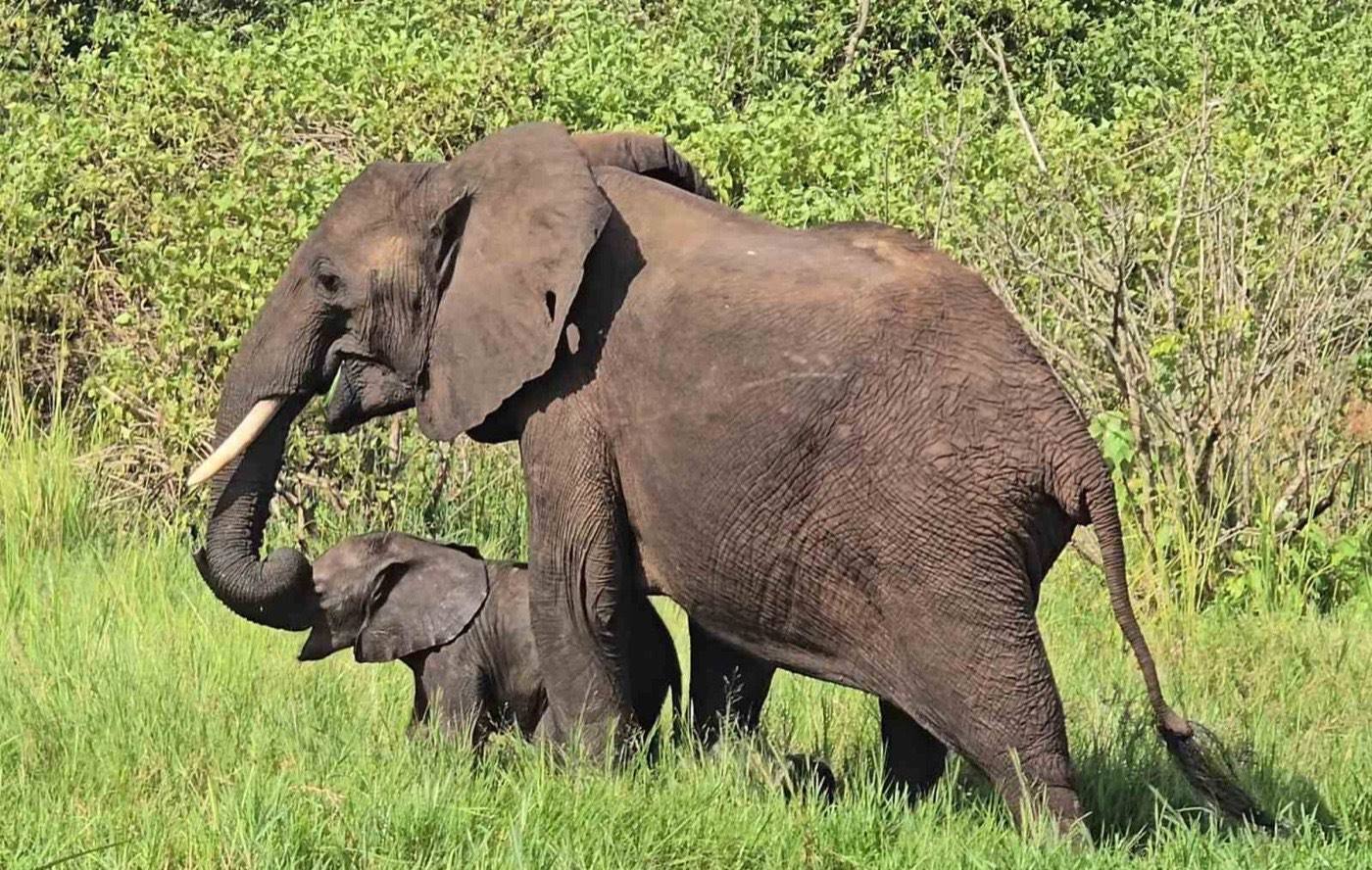
Uganda’s rich biodiversity lies at the heart of every safari journey through the country. Its national parks and natural areas contain a wide variety of habitats, which means that the wildlife you encounter can change significantly as you travel from one region to another. Among the most impressive animals are African elephants. They can be seen both across the savannah and around rivers and waterholes. Encountering a herd of elephants, especially when there are young calves among the adults, often becomes one of the most memorable moments of a safari.
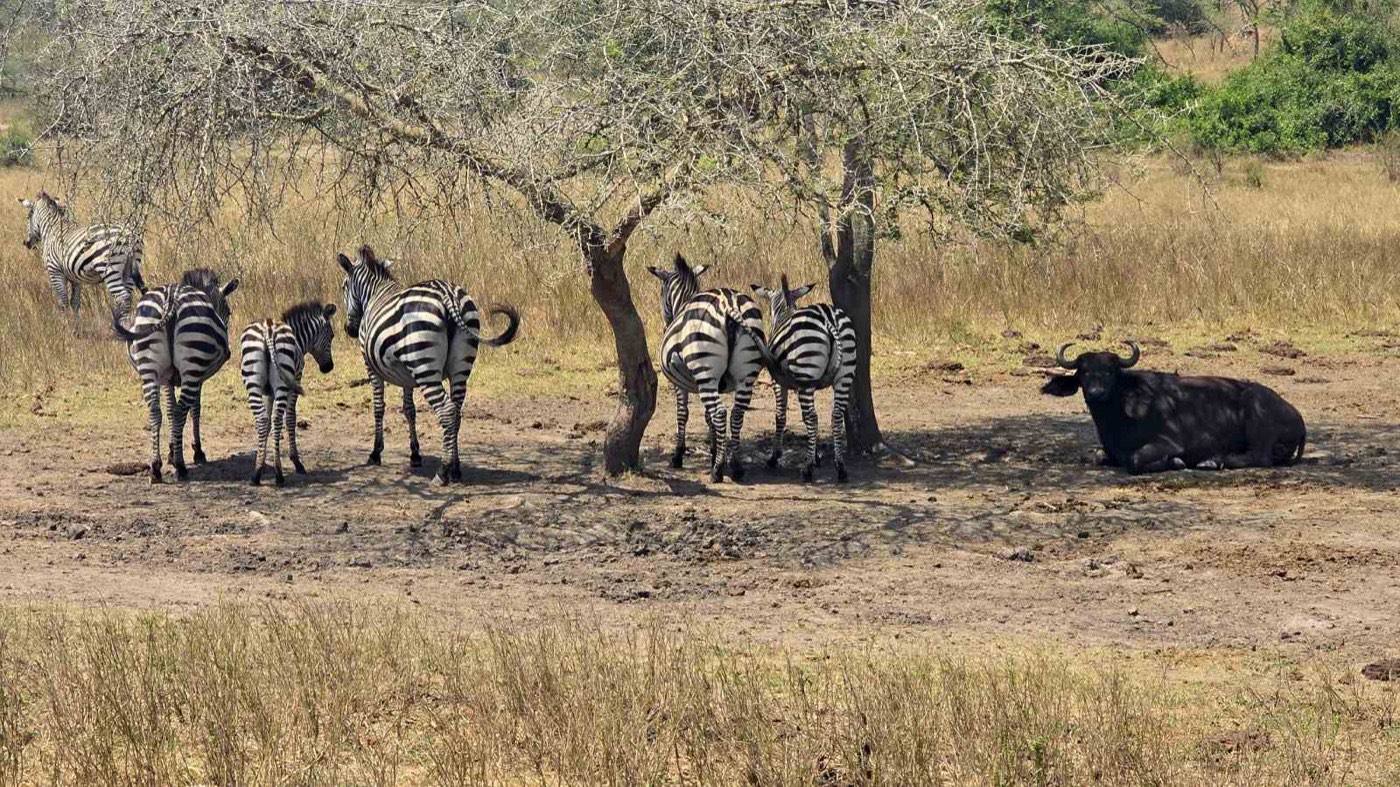
Depending on the national park, you may also encounter giraffes, African buffaloes, zebras, impalas, waterbucks, Uganda kobs, warthogs, and many other species typical of the African savannah.
Uganda is also home to large predators. Lions, leopards, and hyenas can be found in several national parks, but this is where one of the fundamental principles of a genuine safari becomes important – wild animals do not appear on schedule. They move freely through their natural habitat, and no one can guarantee exactly when or where they will be seen. The search itself is part of the experience. An experienced local guide understands animal behaviour, knows the areas they frequently visit, and can interpret tracks and other signs in the landscape.
The Ishasha sector of Queen Elizabeth National Park is particularly fascinating and is famous for its tree-climbing lions, which can sometimes be seen resting on the branches of large trees.
Uganda’s aquatic ecosystems reveal another side of its wildlife. During a boat safari along the Nile or the Kazinga Channel, you may encounter large groups of hippos, Nile crocodiles, and many other animals coming down to the water’s edge to drink.
For bird lovers, Uganda offers exceptional diversity. More than a thousand bird species have been recorded in the country, thanks to its remarkable combination of savannahs, forests, lakes, and wetlands. One of the most distinctive is the shoebill – an extraordinary bird with a characteristic large bill that has become one of the most recognisable symbols of Uganda’s wildlife.
And then there are the primates. Uganda is home to numerous monkey species, chimpanzees and, of course, the iconic mountain gorillas.
This is why a Uganda safari is not about ticking as many animals as possible off a checklist. The country’s diverse ecosystems allow you to see how wildlife is connected to the landscape and how different species share their environment – making every encounter unique.
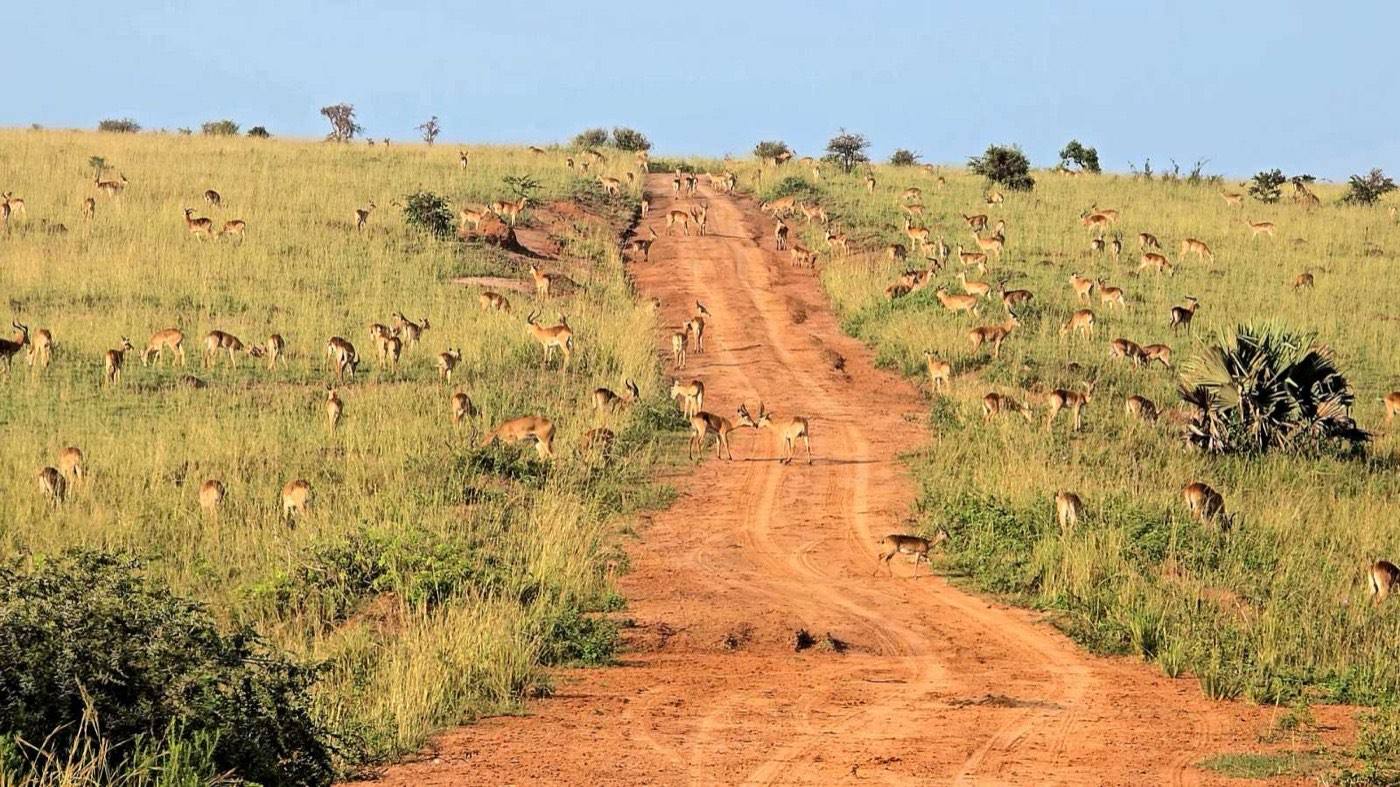
Uganda’s National Parks – From the Savannah to the Nile
Uganda’s National Parks reveal many different sides of the country’s natural landscapes, and each park has its own distinctive character. This is why choosing the right route is an important part of planning a safari.
Murchison Falls National Park is one of Uganda’s best-known and most impressive national parks. Here, a classic wildlife safari is combined with the River Nile and the spectacular Murchison Falls. In different areas of the park, you may encounter giraffes, elephants, buffaloes, antelopes, warthogs, and various predators. One of the most memorable experiences, however, is a boat safari along the Nile. From the water, the landscape and wildlife take on an entirely different perspective. Elephants and buffaloes may appear along the riverbanks, hippos can be seen in the water, while crocodiles rest along the shore. As the boat continues upstream, it gradually approaches Murchison Falls, where an enormous volume of water is forced through a narrow rocky gorge.
Further south lies Queen Elizabeth National Park, a diverse landscape of savannah, lakes, wetlands, and forested areas. One of its most iconic features is the Kazinga Channel, a natural waterway connecting Lake George and Lake Edward. A boat safari along the Kazinga Channel offers excellent opportunities to observe wildlife gathering around the water, while the Ishasha sector in the southern part of the park is famous for its tree-climbing lions.
Lake Mburo National Park offers a completely different experience. It is smaller than many of Uganda’s other national parks and is particularly well known for its zebras and impalas. Guided walking safaris are possible in certain areas, offering a very different way to experience the natural environment. Without a vehicle between you and the landscape, you begin to notice the sounds, animal tracks, and small details that can easily be missed during a traditional game drive.
In the northeastern part of Uganda lies Kidepo Valley National Park – a remote wilderness characterised by vast landscapes and a more rugged sense of the African wild. Its location means that reaching the park requires more travel time, but its remoteness is also an important part of what makes Kidepo so special.
The best safari itinerary is not necessarily the one that includes the greatest number of national parks. What matters more is choosing destinations that complement one another, allowing each place to add something different to the overall journey.
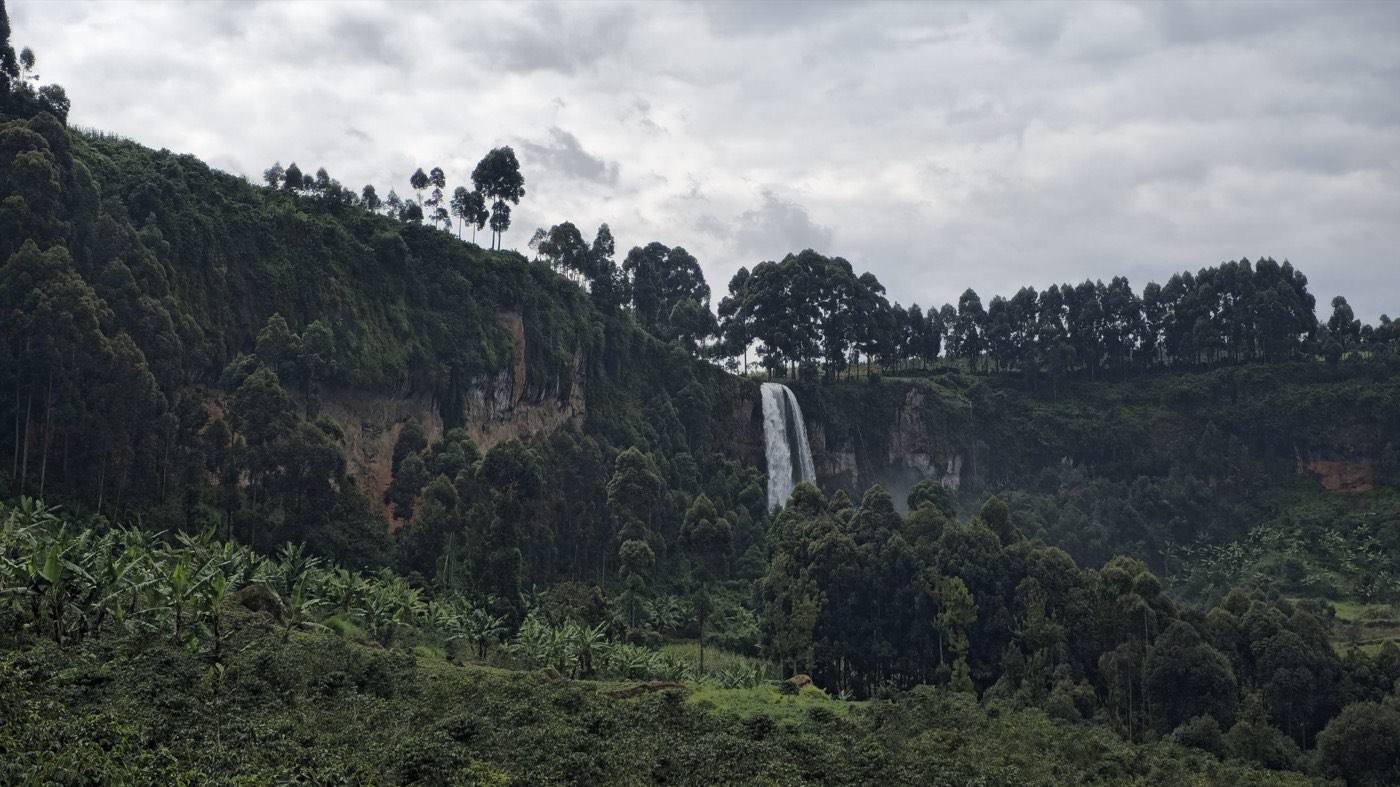
More Than a Safari – Gorillas, Waterfalls, the Nile and Local Culture
One of Uganda’s greatest strengths is that a journey can naturally extend far beyond the classic safari experience. The best-known example is Bwindi Impenetrable National Park. This dense mountain forest is home to part of the world’s remaining population of mountain gorillas, and carefully regulated visits are organised with experienced guides and rangers. Gorilla trekking is very different from a traditional game drive. The journey is made on foot, the terrain can be challenging, and the length of the trek depends on the location of the particular gorilla group on that day. Access is strictly regulated and requires a special permit, which should be arranged well in advance. For this reason, a gorilla encounter requires separate planning, but the opportunity to combine it with a classic African safari is one of Uganda’s greatest advantages.
In eastern Uganda, the landscape changes once again. Sipi Falls lies among the lush green slopes of the Mount Elgon region. Here, the safari vehicle can be replaced by hiking trails leading to the waterfalls, beautiful viewpoints, and visits to local coffee producers. The area is well known for its Arabica coffee, and a coffee tour offers an opportunity to follow the process from the coffee plant all the way to the finished cup.
Another important part of Uganda’s identity is the Nile. In Jinja, travellers can visit the area associated with the Source of the White Nile and explore the river by boat.
And when the journey passes through Kampala, visitors can discover Uganda’s urban side as well – historical and religious landmarks, markets, local crafts, and the everyday life of a rapidly developing African capital. Encounters with local people are also an important part of the journey. They may take the form of a brief conversation along the way, a visit to a local community, or an introduction to local traditions and ways of life. These are the moments when Uganda becomes more than simply a safari destination and begins to reveal itself as a country.
What Does a Safari Journey in Uganda Look Like?
A well-planned Uganda safari usually combines wildlife viewing, transfers between different regions, and a variety of other activities. Safari days often begin early in the morning, when temperatures are more pleasant and many animals are particularly active during the first hours after sunrise. Travel within the national parks is usually by safari vehicle with an experienced guide. This is much more than simply transportation – knowledge of the area and an understanding of wildlife behaviour are an essential part of the experience.
However, no two days have to be the same. A morning game drive might be followed by some time to relax at the lodge and an afternoon boat safari. Another day may be dedicated to travelling to the next national park, followed the next morning by a walking safari or trekking experience.
Accommodation can also vary, ranging from comfortable small hotels and lodges to higher-end safari lodges. When choosing where to stay, location can be just as important as the level of accommodation. Staying close to a national park reduces travel time and allows the day to begin at a more relaxed pace.
Distances in Uganda should not be underestimated, which is why it is important not to overcrowd the itinerary. For a shorter trip, one or two main regions may be the best choice. With 7–10 days or more, several national parks and different activities can be combined without spending most of every day in the vehicle. If the itinerary includes gorilla trekking, advance planning becomes even more important because the number of available permits is limited.
Who Is a Uganda Safari Suitable For?
A journey to Uganda is an excellent choice for travellers looking for something beyond a standard holiday. It is particularly suited to wildlife and photography enthusiasts, those who dream of seeing African animals in their natural habitat, and travellers who want to combine a safari with a variety of natural and cultural experiences. You do not need to be an experienced adventurer. An itinerary can be adapted to different travel styles, levels of physical fitness, and personal interests. Gorilla trekking and some hiking activities require more physical effort, but a classic wildlife safari is suitable for a very wide range of travellers.
It is important, however, to arrive with the right expectations. A safari means experiencing genuine wildlife in its natural environment. Animals do not appear on schedule, weather conditions can occasionally change plans, and longer journeys between different regions are part of travelling through Uganda. This element of unpredictability is also part of what makes the experience so special.
Uganda offers the opportunity to experience savannah and tropical forest, elephants and mountain gorillas, the Nile and spectacular African waterfalls, small villages and lively cities – all within a single journey. A Uganda safari is therefore much more than a series of visits to national parks. It is a way to discover a country where landscapes, wildlife, and people come together as part of one complete experience.
At Africa Whispers Safaris we create itineraries that reveal the many different sides of Uganda – from wildlife safaris to waterfalls, forests, local communities, and places that reflect the true character of the country.
Explore our safari itineraries and discover Uganda in a way you will remember long after your journey has ended.